
Hopelessness is Not an Option
On moving forward in the face of contempt and choosing dignity and hope

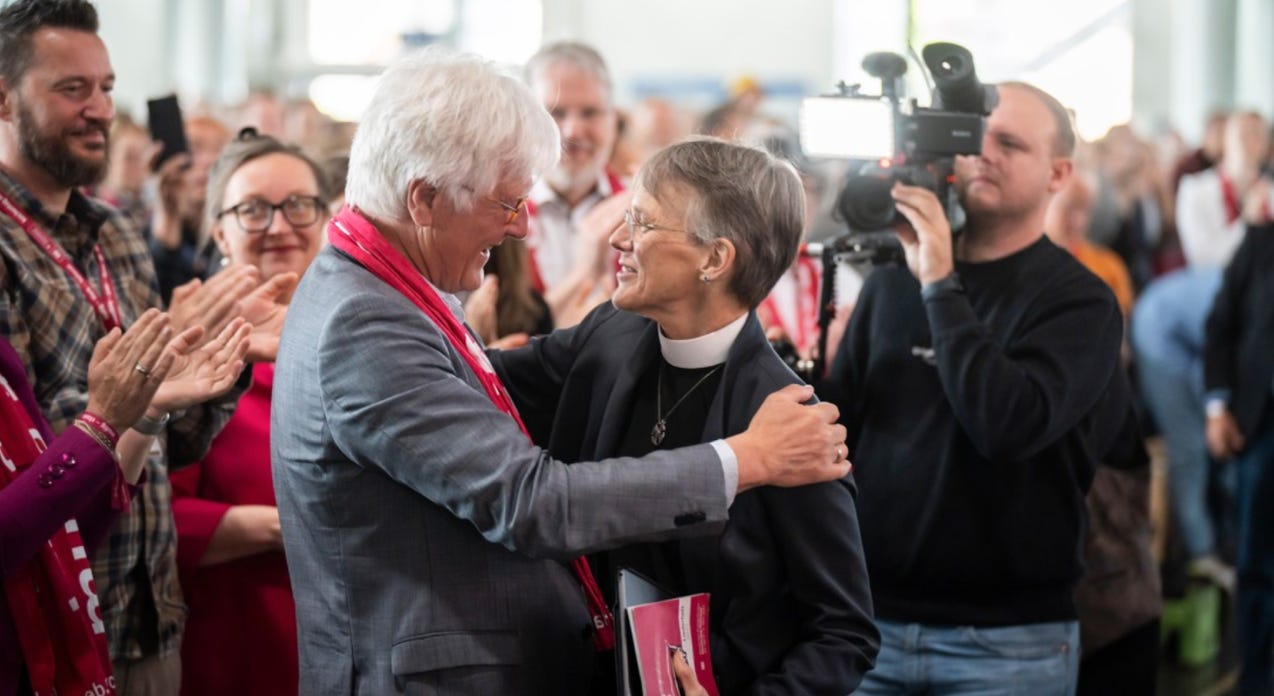
Earlier this year, I had the opportunity to travel to Kirchentag, a gathering in Germany that brings together more than 100,000 attendees from more than 80 nations for discussions on faith, culture, and politics. I was invited to lead a morning Bible study on Matthew 28:1-10 with 4,300 participants and also give an evening address.
It was deeply humbling and inspiring to witness that level of unity, compassion, and hope that reverberated amongst the attendees.
I'd like to share a few of my words from Kirchentag with the hope that you might be encouraged to keep going amid all that we’re facing now. It’s helpful to remember that we’re not alone and that people all over the world are finding their hope in us.
One of the greatest challenges in the United States today is a culture of contempt that has normalized hateful speech and encourages violence. The culture of contempt distorts truth and hinders our ability to have meaningful conversations across our very real differences. We are deeply divided, and the intensity of this polarization and the culture of contempt that sustains it threaten to destroy us. It is actively promoted by those within and outside the United States who benefit financially and politically from our divisions.
The Christian witness in the United States is also divided, for we are a part of the country in which we dwell. We are well-represented across the spectrum of political loyalties and societal polarities. We are influenced by the same pressures as everyone else, and we commit many of the same sins.
Thus, it is essential for Christian leaders to speak and act with humility in the wider society in which we live, for we are in need of the same forgiveness, mercy, and grace that we are called by God to embody for others.
If the continued response to the sermon I preached on January 21st has revealed anything, it is that simply professing a faith rooted in mercy, dignity, honesty, and humility is like water in the desert for parched souls. Rest assured that there are countless people of faith and goodwill in the United States who are speaking out and showing up to care for the most vulnerable and protect the best of America. We don’t have the loudest microphones, but we're still here and we’re not going anywhere.
We’d be made of stone if we didn’t feel discouraged some days and deeply saddened by what we see around us. But remember that hope isn’t something we need to conjure on our own. It is a grace that God gives, allowing us to face evil and death, yet still believe that the life-affirming Spirit is always at work within and around us, bringing about good.
We can rise to this moment, to do our part to stop those who are determined to dismantle the institutions, destroy the guardrails of our democracy, and accelerate the very trends we need to reverse for the human species to survive.
We are the ones who must dare to believe that seeds of new possibilities, invisible to us now, have already been planted in the soil of our lives, and they are slowly taking root. New life will emerge from the ashes of what is lost.
Wherever I go, people tell me that what they need most of all now is hope, hope that we can, indeed, stop the damage being done and work toward a vision of society in which all of us, in our God-given diversity, can thrive.
In a time of needed grace, when courage is required of us, I believe in the power of prayer, not only to sustain us, but to give us the opportunity to express our commitment to God.
I wonder what you say to God. I say all sorts of things — I can’t help it. I pray for help. For forgiveness. For guidance, for myself and those I love, and for our world.
Then, often, a moment follows when I feel the need to say something else — that I am here, willing to stay present and engaged, even when times are hard and getting harder.
This is a time for us as Christians to be present in as many places as we can and offer what we have to give. It is a time for us to invest in the things we believe in; to find, if not common cause with those with whom we differ, at least shared ground with anyone working toward the common goals for different reasons. As followers of Jesus, we are to speak up for the inherent belovedness and dignity of others.
To do this, we need to be grounded daily in our own belovedness, drawing from the wells of God’s love for us, and to pray daily for wisdom, strength, and grace. There is a lot at stake, and the success of our efforts is not certain.
But for Christians, hopelessness is not an option — not because of us, but because of Christ’s dwelling in us and our ultimate hope in our true home in the love of God. We have our north star. In that faith, we go on. We are the ones now. For this hour, we are here.
Mariann, your words ring with the kind of strength that doesn’t need to shout—because it knows where it stands. And I want to offer mine, from this other shore of the river, where I don’t pray in the same way, but I still believe in the soul of a people who refuse to give up.
I’m not here to hijack your message. I’m here to echo it. To lend the full weight of a secular humanist’s heart and history to the same vision. Because what you described at Kirchentag—that felt presence of 100,000 people across cultures, languages, and beliefs, gathering not to conquer but to connect—that’s not just a religious experience. That’s a human one. That’s the miracle of showing up in a time when retreat would be so much easier.
And you’re right. Hope is in short supply. But not because it’s gone—it’s because the noise has grown louder. The machinery of contempt and cruelty, as you said, is relentless. It’s fed by people who profit from despair, who engineer division the way others build bridges. And if we’re not careful, we begin to believe the worst of each other just to make sense of the chaos.
But we are not the worst of each other.
I know this because I’ve seen the best. In war zones and disaster sites. In courtrooms and classrooms. In crowded subway stations and lonely hospital hallways. And I hear it again in your sermon—a call not to retreat behind our separate vocabularies of belief, but to rise in the shared language of love, dignity, humility, and courage.
I don’t speak of grace in the theological sense. But I know what it means to be sustained by something greater than self-interest. I’ve seen what it looks like when people stand up not because they think they’ll win, but because it’s the right thing to do. That’s where my hope comes from.
And to every person who reads your words and wonders if they can keep going—I say yes.
Yes, you can.
Because you are not alone.
Because hope is not a solo act.
It’s a chorus.
And we need every voice in it.
We may not all pray the same way—or at all—but we can all commit to something greater than ourselves. We can commit to one another. To decency. To justice. To compassion in the face of cruelty. To stubborn, defiant goodness.
We are here for this hour. We are the ones now.
And whether you call that courage grace, or love, or simply showing up—that is what will save us. Not because it’s easy. But because it’s right
This is the kind of hope that doesn’t sell books or win elections—but it raises the dead.
Thank you for reminding us that the antidote to contempt is not cowardice or silence, but a fierce and grounded love that refuses to dehumanize even when it’s unpopular. In an age where rage is monetized and truth is edited for clicks, bearing witness to mercy is downright rebellious.
Hopelessness isn’t just a temptation—it’s a strategy of the empire. If we believe nothing can change, we stop trying. We stop showing up. But the Spirit hasn't stopped moving just because the algorithms got meaner.
So yes—may we be the ones who still believe in dignity. Who stay rooted in divine belovedness. Who keep watch, keep praying, and keep planting seeds, even when the headlines scream otherwise.